Instagram Shopping has evolved from a novelty feature in 2018 to a mature commerce channel that brands of all sizes now depend on as a significant revenue source. In 2026, the gap between brands using Shopping features effectively and those treating Instagram as a pure awareness channel is visible in their revenue numbers.
Here is a complete breakdown of how Instagram Shopping works in 2026, how to set it up correctly, and the content and conversion strategies that turn passive followers into active buyers.
How Instagram Shopping Works in 2026
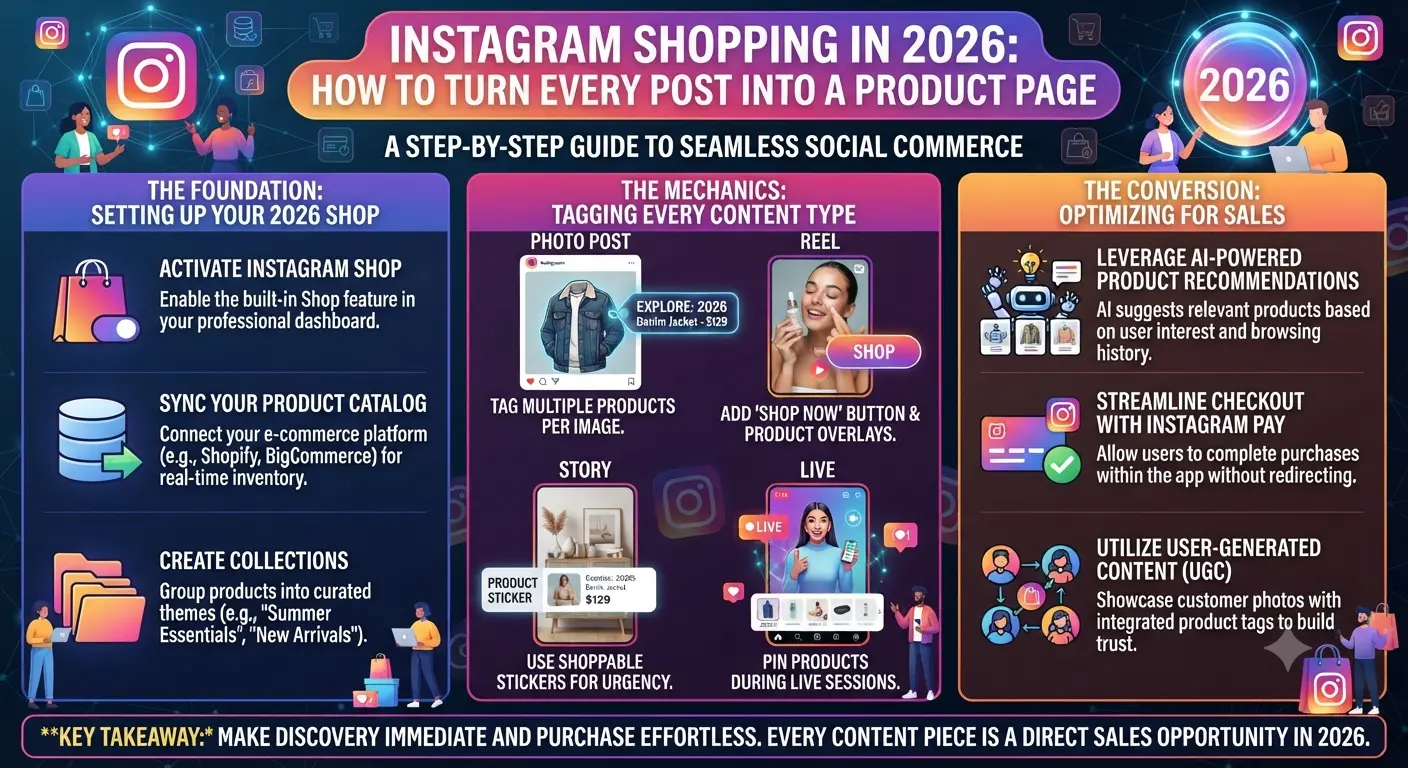
Instagram Shopping creates a connected commerce layer on top of regular Instagram content. When you tag a product in a post, a small shopping bag icon appears on the image. Followers who tap it see a product detail overlay with the item name, price, description, and a link to purchase. Depending on your setup, this purchase can happen on your website or entirely within Instagram through Instagram Checkout.
The platform has also added a dedicated Shop tab on business profiles and a browsable Shop discovery feed where Instagram surfaces shoppable content to users based on their interests and browsing behavior. This means your product content can reach people who have never visited your profile if Instagram's algorithm determines they match your product's audience.
Setting Up Instagram Shopping: Step by Step
Complete Instagram Shopping Setup
- 1Ensure your account is a Business or Creator account and is based in a country where Instagram Shopping is available. The feature is now available in over 70 countries.
- 2Connect your Instagram account to a Facebook Page through Accounts Center if you have not already done so. Instagram Shopping requires this connection.
- 3Open Meta Commerce Manager at business.facebook.com and create a product catalog. Upload your products manually, through a data feed, or by connecting your e-commerce platform. Shopify, WooCommerce, BigCommerce, and most major platforms have direct integrations.
- 4In Instagram Settings, tap Business and then Shopping. Connect your catalog to your Instagram account and submit your account for review.
- 5Wait for Instagram's approval notification. Review typically takes one to five business days. Once approved, product tagging becomes available in your post creation flow.
- 6Tag products in your first post. Tap the product tagging icon when creating a feed post, Reel, or story and search your catalog to select the relevant product.
Instagram Shopping Features by Content Type
| Content Type | Product Tagging | In-App Checkout | Shop Discovery | Best Use Case |
|---|---|---|---|---|
| Feed Posts | Yes | Yes | Yes | Lifestyle imagery, product features |
| Reels | Yes | Yes | Yes | Product demos, unboxings, tutorials |
| Stories | Yes (sticker) | Yes | No | Flash sales, limited offers, swipe-up conversion |
| Live | Yes (pinnable) | Yes | No | Live product launches, Q&A with purchase |
| Carousels | Yes (per slide) | Yes | Yes | Product collections, before and after, how-to |
The Content Strategies That Convert Browsers Into Buyers
Lifestyle Context Over Product Isolation
Product photos on white backgrounds perform well on marketplaces but poorly on Instagram. The feed is a lifestyle environment where content competes for attention against personal posts from friends and family. Products shown in context, in use, in a real environment that the target customer aspires to or identifies with, consistently outperform isolated product shots on engagement and click-through metrics.
The product tag converts the lifestyle image into a shoppable moment without disrupting the lifestyle visual. The viewer sees the image as content first and the shopping opportunity as an available option, which reduces the resistance that overtly commercial content creates.
Story Shopping for Urgency and Flash Sales
Stories are the highest-converting placement for time-sensitive shopping content. A story with a product sticker, a compelling visual, and a clear urgency driver, whether that is limited stock, a 24-hour discount, or an exclusive launch, combines the intimacy of the story format with the immediacy of a limited-time offer. The 24-hour story expiry creates built-in urgency that standard feed posts do not have.
Reel Product Demonstrations
Reels that demonstrate a product in genuine use, showing what it does and the problem it solves, generate higher conversion rates from the product tag than static imagery. A cooking product demonstrated in an actual recipe Reel reaches people already in the mindset of the use case. The product tag at that moment of peak relevance captures purchase intent that a general feed browse would not.
User-Generated Content With Product Tags
Repurposing customer content and tagging the products featured in it provides social proof at the point of discovery. When a potential buyer sees an unfiltered customer using a product, the authenticity signal is higher than any brand-produced content. Obtaining permission to repost and tag customer content is one of the highest-ROI tactics in Instagram Shopping strategy.
Key Takeaways
- Instagram Shopping is now available across feed posts, Reels, stories, carousels, and Live, making every content format a potential purchase touchpoint.
- Setup requires a business account, a connected Facebook Page, a Meta Commerce Manager catalog, and Instagram's approval process which typically takes one to five days.
- Lifestyle context imagery consistently outperforms isolated product shots for Shopping engagement on Instagram because it competes naturally with organic lifestyle content in the feed.
- Stories are the highest-converting placement for time-sensitive and urgency-driven shopping content due to the format's intimate feel and built-in 24-hour expiry.
- User-generated content tagged with products provides the strongest social proof signal at the point of product discovery and is among the highest-ROI content strategies for Instagram Shopping.
- The Shop tab on your profile functions as a standalone storefront. Treating it as a curated buying experience rather than a catalog backend significantly improves its conversion performance.
Frequently Asked Questions
How do I set up Instagram Shopping for my business?
You need a Business or Creator account, a connected Facebook Page, and a product catalog in Meta Commerce Manager. Connect your catalog to Instagram through Settings under Business and then Shopping, and submit for review. Approval typically takes one to five business days, after which product tagging is available across all content types.
Can customers buy products directly on Instagram without going to my website?
Yes, through Instagram Checkout, which is available in the United States and select other markets. With Checkout enabled, the entire purchase including payment and order confirmation happens within the Instagram app. For markets where Checkout is not available, the product tag sends buyers to your website to complete the purchase.
Does Instagram Shopping work for service-based businesses?
Instagram Shopping is designed primarily for physical product businesses. Service-based businesses cannot tag services as products in the same way. However, service businesses can use Instagram's appointment booking integration, link-in-bio tools, and story link stickers to drive conversions. The Shopping catalog feature specifically requires tangible products.
How many products can I tag in one Instagram post?
You can tag up to five products in a single image post and up to twenty products in a carousel post. For stories, you can add one product sticker per story slide. Reels support product tags that appear in a browsable product list beneath the video rather than overlaid on the content.
Does Instagram Shopping affect the organic reach of my posts?
Shoppable posts are eligible to appear in the Shop discovery feed, which is an additional distribution channel not available to non-tagged posts. This can increase reach for shoppable content beyond what standard algorithm distribution would produce. Instagram has not indicated that product tagging negatively affects reach through the regular feed algorithm.