Quick Answer: Influencer and talent agencies use anonymous story viewer apps to conduct anonymous research on a creator's story history and content before reaching out to them or presenting them to a brand partner. This anonymous research takes place before initial contact is made, and enables an agency to make decisions about representation based on a creator's authentic story, not what the creator may choose to share in the lead-up to an agency meeting.
Signing the wrong creator is a costly mistake for a talent agency, with both the costs of pitching and onboarding a creator, or the long-term effects on an agency's reputation with brand partners if their signed creator has poor engagement patterns, is unprofessional or difficult to work with, or has other undetected quality issues.
Professional agencies have a standardized due diligence process that always begins with this anonymous research before any conversation about representation even takes place here's how that process works.
Why Research Anonymously Before Contacting a Creator?
From the moment an agency begins communicating with a creator, the dynamic of that relationship begins to shift.
Creators who understand they're being researched by an agency will put their best face forward in the short term - this is only natural and to be expected, but it means that any research the agency conducts after initial contact has already taken place will reflect a creator at their best, rather than in the organic pattern of their usual content creation.
Anonymous research provides an accurate picture of a creator's actual, unmanipulated engagement with their audience and brand partners, and this is the reality an agency needs to be considering before making a commitment to sign a creator and pitch them to brand partners.
The 4 Pillars of Agency Creator Research
Pillar 1
Content Consistency and Reliability
Agencies view 30-90 days of a creator's story history to determine if they post consistently, as brands expect creators to deliver content reliably and on schedule. A sporadic poster represents a risk of fulfillment to brands, and the same is true for influencers with no story history, who may prove unreliable once signed.
Pillar 2
Authentic Audience Engagement
Beyond simple follower counts, agencies assess how a creator's story content and polls perform in terms of engagement, and if their audience actually seems to be listening to what they say. This helps determine if a creator has a following of real people who engage with them, or simply a large number of disengaged or fake accounts.
Pillar 3
Existing Brand Relationship Quality
By reviewing what brand content already appears in a creator's highlights and story history, agencies can evaluate how the creator has managed relationships with brands in the past, if they disclose brand partnerships properly, and if they would be able to integrate new brand content into their existing story content in a way that doesn't disrupt their usual posting pattern.
Pillar 4
Brand Safety and Content Standards
Reviewing a creator's story content for brand safety and alignment with the values of the brand partners the agency generally works with, looking for potentially unethical or illegal content, and identifying if a creator's content curation and posting style would be compatible with the kinds of brands they might expect to work with.
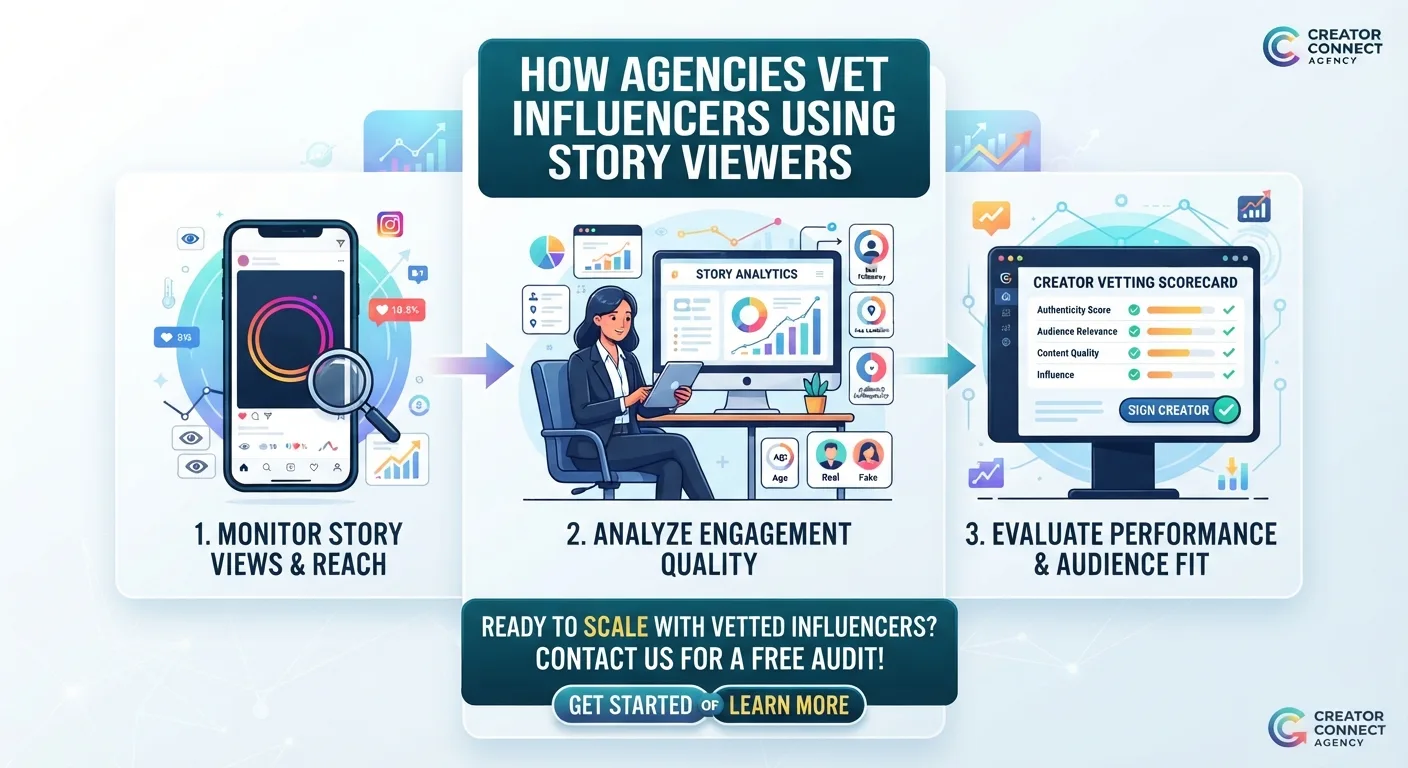
A Typical Agency Vetting Process
1A creator is found to be a potential fit, either by the creator reaching out to the agency, a talent scout identifying them as a possible fit, or an algorithm recommendation for a rising creator in a relevant niche.
2The agency's talent team reviews the creator's story history through an anonymous viewer tool, to determine if they post consistently, and what the general subject matter and tone of their story content is.
3The talent team reviews public content, comments, and highlight sections for additional insight into a creator's potential fit with brands, and if they have experience working with brand content.
4Research is compiled into a standardized note-taking format so multiple creators can be reviewed objectively before the agency determines which ones they'd like to reach out to.
5Creators are only contacted for representation if they pass initial review, at which point the relationship becomes transparent and direct.
Why this is valuable from a creator's perspective too: When a creator receives direct outreach from an agency, they can be sure that the agency has performed substantial research and vetting before reaching out, which is valuable from both an influencer and brand perspective, as it reduces the risk of a bad fit signing with the brand and wasting both their and the brand's time and resources.
Creators who understand how agencies work can even use this to their advantage; the value of honest, consistent story content extends beyond just potential agencies, as it makes a creator more likely to receive brand collaborations as well, whether or not they're represented by an agency.
What Agencies Look For Beyond Numbers
While numerical performance is a valuable data point to any potential brand partner, agencies also look at the qualitative impression of a creator, how they carry themselves on camera or in their story, and whether they seem like a good fit for the kinds of products brands tend to work with.
This is why agencies perform this anonymous research in the first place; to get an accurate unvarnished view of a creator's personality and potential fit that isn't affected by them knowing they are being observed.
7 Things Instagram Can See Even If You Have a Private Account
Key Takeaways
Influencer agencies use anonymous story viewer tools to research creators before reaching out to them, enabling them to conduct due diligence in an anonymous capacity and avoid the risk of a creator modifying their behavior during the research process.
Agencies evaluate creators on content consistency, authentic audience engagement, brand relationship quality, and brand safety and alignment with potential brand partners.
Anonymous research helps avoid the dynamic shift that takes place when a creator realizes they're being researched by an agency.
Agencies have standardized processes to review multiple potential creators at once, and only reach out to those who have passed their initial screening.
This ultimately even benefits creators, as it reduces the risk of a brand or agency reaching out without serious consideration and wasting the creator's and their own time.
Frequently Asked Questions
Do influencer agencies actually research creators before contacting them?
Yes, this is a standard practice among professional agencies; an influencer agency's due diligence process before signing a creator and pitching them to brand partners is always performed anonymously, to avoid bias caused by the creator knowing they're being observed at the time of the research.
Can a creator tell if an agency is anonymously viewing their stories?
No, when performed through an anonymous viewer tool, this kind of research leaves no trace in a creator's story viewer list or access history that would let them know they're being observed.
What should creators do to prepare for this type of review?
It's best to prepare for it in the same way you would prepare for any potential brand outreach or sponsorship; post consistently rather than waiting until you need someone to promote, and respond genuinely to your audience. Be transparent about sponsored content when it is appropriate. Since this kind of review only takes place if you're not actively seeking opportunities, there's not much else you can do to specifically prepare.
Isn't this only a thing agencies do at a certain scale?
No; boutique agencies, individual managers, and even brands sometimes use the same anonymous research tools to find influencers to collaborate with.
Does the size of the organization affect the vetting process?
Not really; while larger agencies have more overhead and greater expectations when it comes to the influencers they work with, the same basic standards apply to boutique agencies and individual managers, who also want to reduce the risk of a creator not fulfilling their obligations or damaging the manager's or agency's reputation.
How long does this review typically take?
Depending on how thorough an agency is and how many creators they're comparing at once, reviewing a single creator can take the talent team anywhere from 30 minutes to an hour, though this can vary widely. Agencies that need to compare multiple creators for a brand campaign or general fit will spend more time reviewing a short list of potential candidates before reaching out.