Most people understand in a general sense that Instagram collects data about them. What most people do not realize is the scope of that collection, the depth of the behavioral profiling it enables, and the degree to which it extends well beyond the Instagram app itself.
This is not a conspiracy theory piece. Everything covered here is documented in Meta's own privacy policy and supported by regulatory filings, academic research, and journalism based on internal documents. Understanding what is actually collected is the first step toward making informed decisions about your privacy.
Category 1: What You Give Instagram Directly
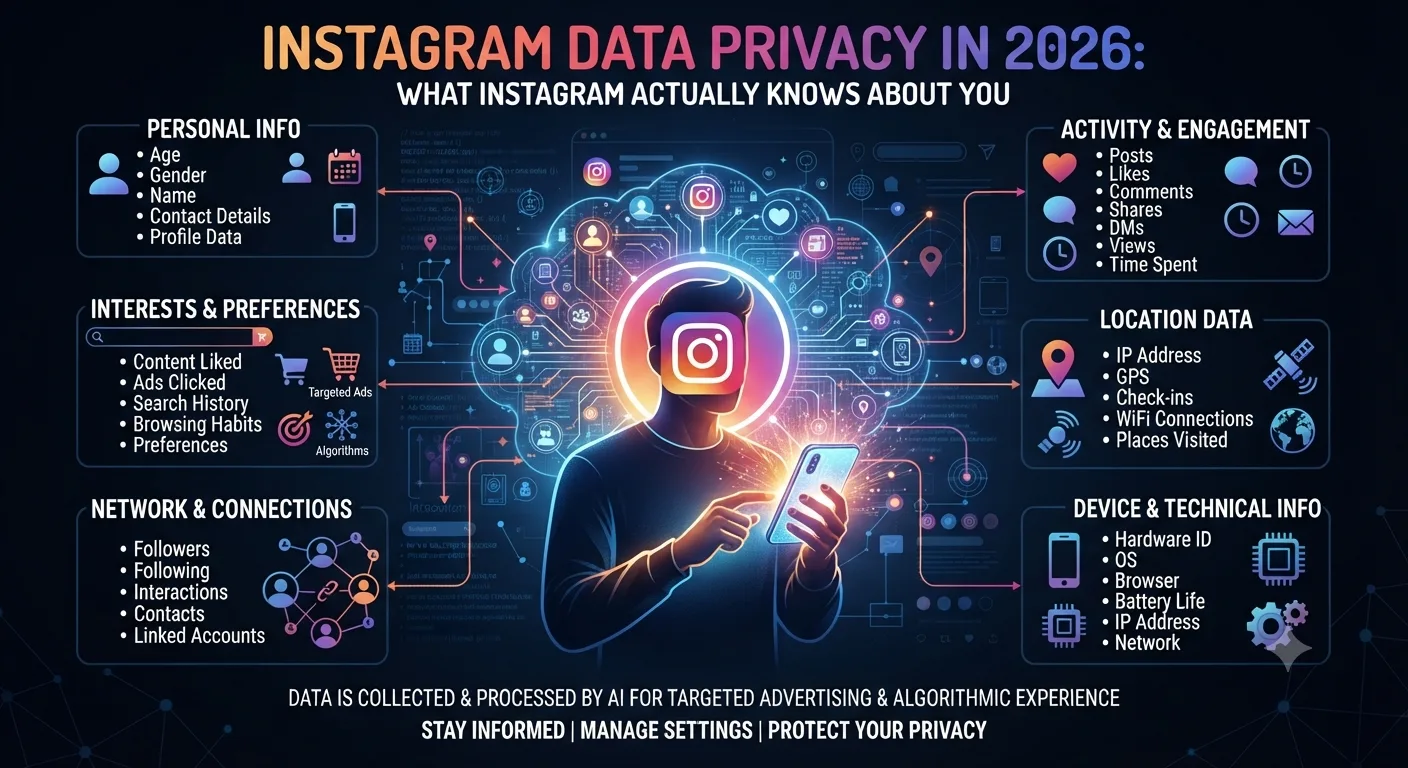
The most obvious data Instagram collects is what you provide when you create and use your account. This includes your name, email address, phone number, date of birth, gender, profile photo, biography, posts, captions, hashtags, story content, reels, and any direct messages you send.
It also includes content you interact with: every post you like, every comment you write, every account you follow, every story you view, every poll you answer, and every link you tap. All of this is logged and associated with your account profile.
Category 2: What Instagram Collects From Your Device
Beyond what you actively do in the app, Instagram collects extensive device-level information. According to Meta's privacy policy, this includes your IP address, device type, operating system, browser type, device identifiers, app version, network type, and the specific hardware sensors on your phone including the accelerometer, gyroscope, camera, microphone, and GPS.
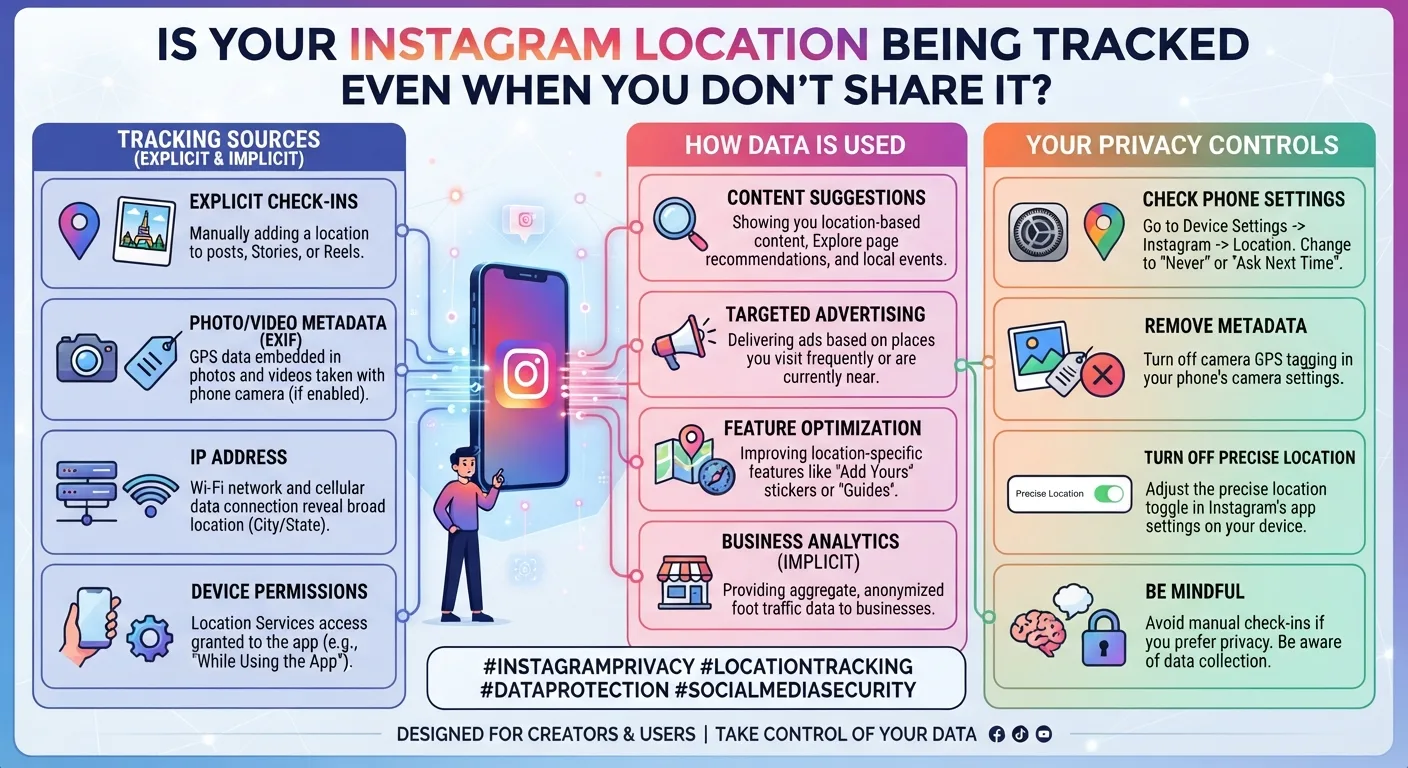
Your precise location is collected when location services are enabled, and approximate location is inferred from your IP address even when location permissions are turned off. Instagram does not need location access to know roughly where you are.
Category 3: Your Behavior Inside the App
This is the category most users underestimate. Instagram tracks not just what you click but what you pause on, how long you spend on each piece of content, in what order you view stories, which posts you view but do not like, which profiles you visit but do not follow, and how you scroll through your feed.
These behavioral signals are processed by machine learning systems to build a detailed behavioral profile that predicts your interests, moods, purchasing intent, political leanings, relationship status, health concerns, and lifestyle preferences. This profile is what advertisers pay to reach.
Category 4: Data Collected Outside the Instagram App
Instagram collects data about your behavior on websites and apps that have nothing to do with Instagram, through the Meta Pixel tracking technology. When you visit any website that has the Meta Pixel installed, a small piece of code reports your visit and browsing behavior back to Meta, even if you are not logged into Instagram at the time.
The Meta Pixel is installed on millions of websites globally including news sites, e-commerce stores, health services, and financial platforms. Meta combines this off-platform data with your Instagram profile to build a more complete picture of who you are and what you are interested in.
Meta also receives data from data broker partners who provide additional demographic, financial, and behavioral data about users that Meta then cross-references with its own profiles.
Category 5: Facial Recognition and Biometric Data
Meta has faced significant regulatory scrutiny over facial recognition data in multiple jurisdictions. Meta was fined $650 million in Illinois over facial recognition practices and has modified some of its features in response to regulatory pressure. However, photo analysis and facial data processing continues as part of tagging suggestions, content moderation, and identity verification systems.
When you upload photos to Instagram, the platform analyzes them for faces, objects, scenes, and text. This analysis feeds into both advertising targeting and content recommendation systems.
How to Limit What Instagram Collects
You cannot completely prevent data collection while using Instagram. But there are steps that reduce the scope of what is collected and how it is used.
Turn off precise location access for the Instagram app in your phone's settings. Instagram still infers location from your IP address but loses access to GPS-level precision. Revoke microphone access when you are not actively using voice or video features in the app.
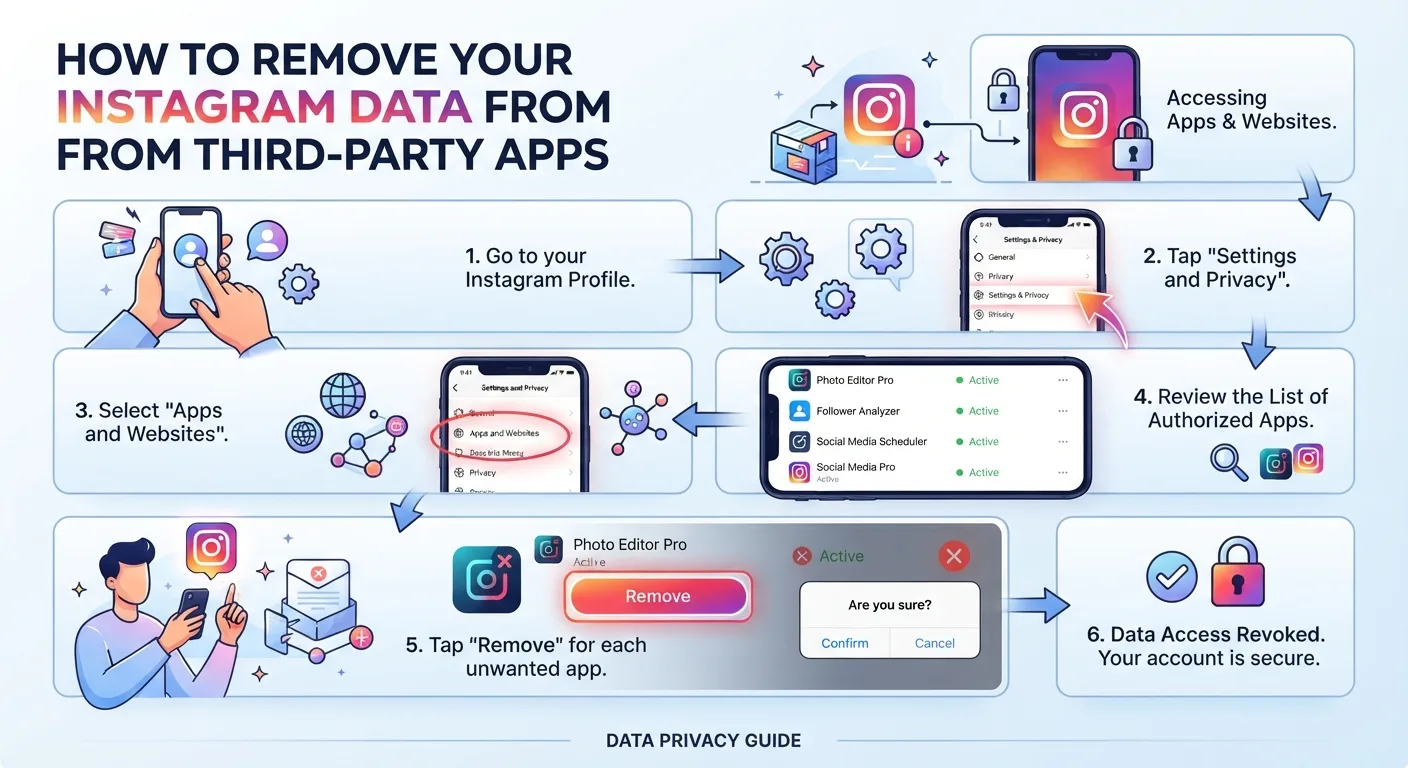
In Instagram's settings under Accounts Center, you can find options to review which off-platform data Meta has linked to your account and request that it is disconnected. This does not stop future collection but clears the existing off-platform history from your ad targeting profile.
Using a VPN masks your IP address from Instagram, which limits location inference and makes cross-site tracking through the Meta Pixel less accurate. It does not prevent data collection inside the app but reduces the precision of one of Instagram's core tracking mechanisms.
If you want to browse public Instagram content without contributing to Meta's data collection at all, an anonymous Instagram viewer tool accesses content without requiring you to be logged in. Your behavior generates no data associated with any personal profile.
Key Takeaways
- Instagram collects data from five main categories: what you provide directly, device information, in-app behavior, off-platform tracking, and biometric and visual data.
- Behavioral signals including pauses, scroll patterns, and viewed-but-not-liked content are as valuable to Instagram's ad system as active engagement.
- The Meta Pixel collects data about your browsing behavior on external websites and connects it to your Instagram profile.
- You can reduce but not eliminate data collection through location and microphone permission management, off-platform data disconnection, and VPN use.
- Using an anonymous Instagram viewer tool allows you to browse public content without contributing behavioral data to Meta's advertising profile systems.
Frequently Asked Questions
Does Instagram listen to my microphone to target ads?
Meta has consistently denied that Instagram listens to conversations through the microphone for ad targeting. The more likely explanation for seemingly uncanny ad relevance is the sophistication of behavioral targeting based on in-app signals, location data, and cross-platform tracking. That said, revoking microphone access when not needed is a reasonable privacy precaution.
Can I download all the data Instagram has collected about me?
Yes. Under Instagram's settings in Accounts Center, you can request a download of your data. The file includes your posts, messages, search history, ad interests, location information, and more. It is a useful way to understand the scope of what Instagram has recorded.
Does Instagram share my data with other companies?
Instagram shares data across Meta's family of apps including Facebook and WhatsApp. It also shares data with third-party advertising partners and measurement companies. It does not sell your raw personal data to outside companies, but it does allow advertisers to target users based on profiles built from that data.
Is Instagram data collection legal?
Meta's data practices operate under terms of service that users agree to when creating an account. However, regulators in the European Union, United Kingdom, and several US states have challenged specific practices and imposed fines. The legal landscape around data collection continues to evolve and Instagram has modified certain features in response to regulatory decisions.
Does deleting my Instagram account delete all my data?
Deleting your account removes your publicly visible content and begins a process of removing your personal data from Meta's active systems, though Meta's policy indicates this can take up to 90 days. Some data may be retained for legal compliance purposes even after account deletion. Meta's full data retention policy is available in their privacy documentation.