Every creator and brand on Instagram faces the same decision: should you put your energy into stories or reels? Both formats are alive, both have audiences, and both serve different purposes. But if you are trying to grow faster and reach more people, the answer in 2026 is not as simple as it used to be.
Here is a clear breakdown of how stories and reels actually perform, who each format serves best, and how to decide where to focus your time.
What Instagram Stories Are Built For
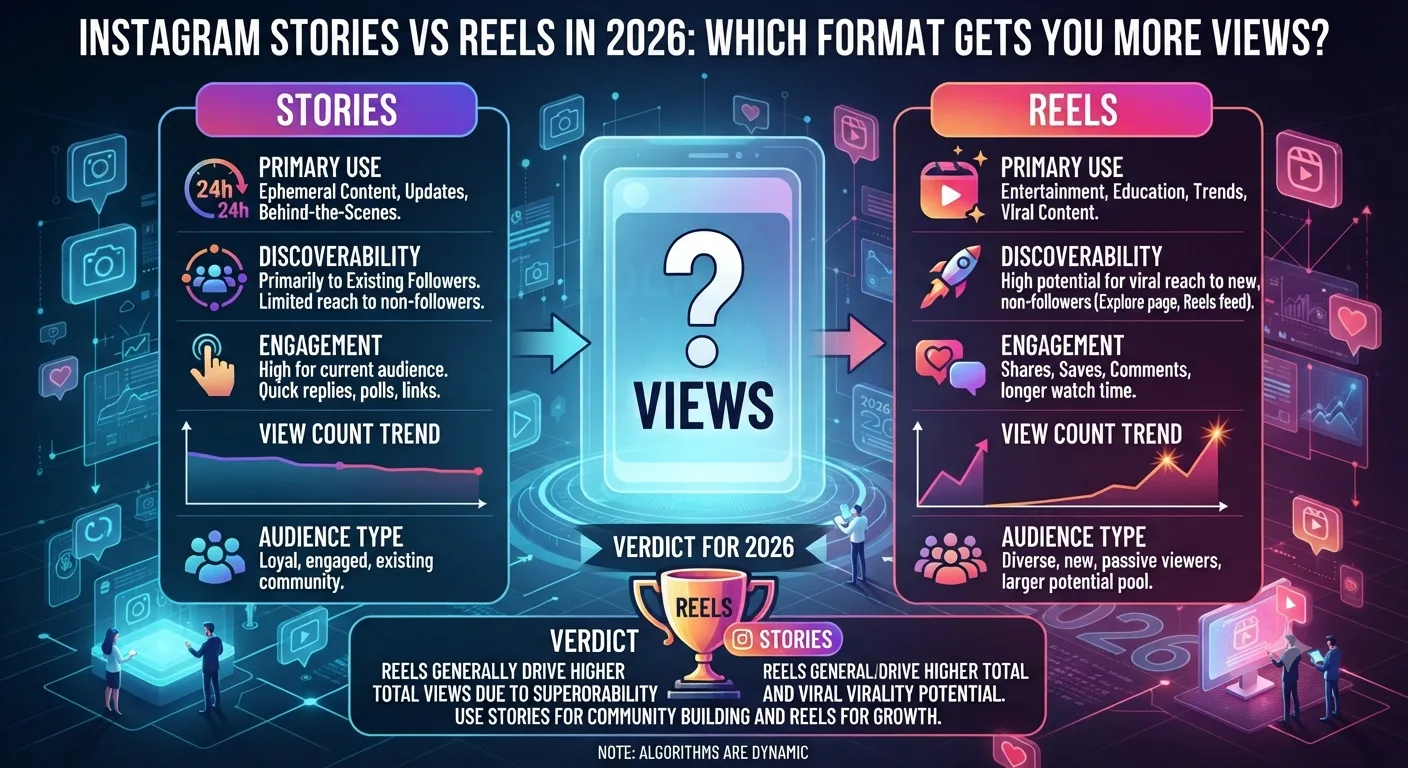
Stories are temporary, 24-hour content that appears at the top of the feed for your existing followers. They are designed for connection, not discovery. When you post a story, Instagram shows it primarily to people who already follow you.
This makes stories powerful for:
Keeping your current audience engaged with daily updates, polls, Q&As, and behind-the-scenes content. Driving direct actions like link clicks, product swipes, and DM conversations. Building trust through authentic, unpolished content that feels personal. Testing ideas before investing in full production for reels or feed posts.
According to Meta's creator insights from early 2026, stories that include interactive stickers like polls and question boxes see up to 20 percent higher reply rates compared to passive story content. Engagement, not reach, is where stories perform.
What Instagram Reels Are Built For
Reels are short videos that Instagram distributes beyond your existing followers through the Explore page, the Reels tab, and algorithmic recommendations. Unlike stories, reels are designed for discovery.
When a reel performs well, Instagram pushes it to users who do not follow you at all. This is the primary growth engine on the platform in 2026. Creators consistently report that a single viral reel can add thousands of followers in days, something a story can almost never do on its own.
Reels work best for:
Reaching new audiences who have never heard of you. Building follower count faster than any other content format on the platform. Establishing expertise or entertainment value for cold audiences. Getting placed in front of people who are actively browsing the Reels tab.
View Counts: What the Numbers Actually Mean
Stories and reels measure views differently, which confuses a lot of creators.
A story view counts when someone taps your story and stays on it for even a fraction of a second. These are almost always your existing followers. If your account has 10,000 followers, a good story might get 800 to 1,500 views. That is 8 to 15 percent of your audience, which is actually a healthy engagement rate.
A reel view counts when someone watches at least three seconds of your video. Because reels are pushed to non-followers, a reel from a 10,000 follower account can easily get 50,000 or even 500,000 views if the algorithm picks it up. The potential ceiling is dramatically higher.
So reels win on raw view numbers. But stories win on view quality — the people watching your stories already trust you and are far more likely to take action.
Which Format Gets You More Sales and Conversions?
Stories outperform reels for direct conversions. Story viewers are warm. They follow you, they know your brand, and they are already interested. A story with a clear call to action and a link sticker consistently converts better than a reel viewed by strangers.
Reels are better for top-of-funnel awareness. You use them to get discovered, then convert those new followers later through stories, DMs, and email lists.
The most effective strategy in 2026 is to use both in sequence: post a reel to attract new people, then deepen the relationship through stories so they eventually buy.
Who Should Focus on Reels?
Reels are the right priority if you are in growth mode, want to reach a new audience, have video production skills or are willing to develop them, or are in a niche where short-form video content performs well such as fitness, cooking, travel, fashion, comedy, and education.
Who Should Focus on Stories?
Stories are the right priority if you already have a solid follower base you want to monetize, sell products or services where trust matters, run a service business where relationships drive sales, or want to build a community rather than chase follower numbers.
Key Takeaways
Reels win for reach and discovery. Stories win for engagement, trust, and conversions. The best Instagram strategy in 2026 uses both formats working together rather than treating them as competing choices. If you are starting from zero, lean into reels first to build your audience. Once you have followers, invest more into stories to convert them.
Frequently Asked Questions
Do stories or reels get more views on Instagram? Reels typically get more total views because Instagram distributes them to non-followers. Stories reach a smaller but more engaged existing audience.
Should I post stories every day? Yes. Daily stories keep you visible at the top of your followers' feeds and maintain a consistent presence without requiring polished production.
How many reels should I post per week? Most creators who are growing consistently in 2026 post between 3 and 5 reels per week. Quality and consistency matter more than posting every single day.
Can a story go viral like a reel? Not in the traditional sense. Stories are only visible to your followers and to people you send them to directly. They do not get distributed by the algorithm to new audiences.
Does watching someone's story help their Instagram growth? Not directly. Story views do not influence the algorithm's distribution of their other content in any significant way.