Instagram use among minors is a genuine concern for most parents, and the platform has responded over the past several years with expanded safety features specifically for younger users. At the same time, parents want practical, real methods to understand what their child is actually doing on the platform, not just what Instagram's official tools disclose.
Here is a complete guide covering Instagram's official parental tools, independent verification methods, and how to think about the balance between safety and appropriate trust as children get older.
Instagram's Family Center: The Official Starting Point
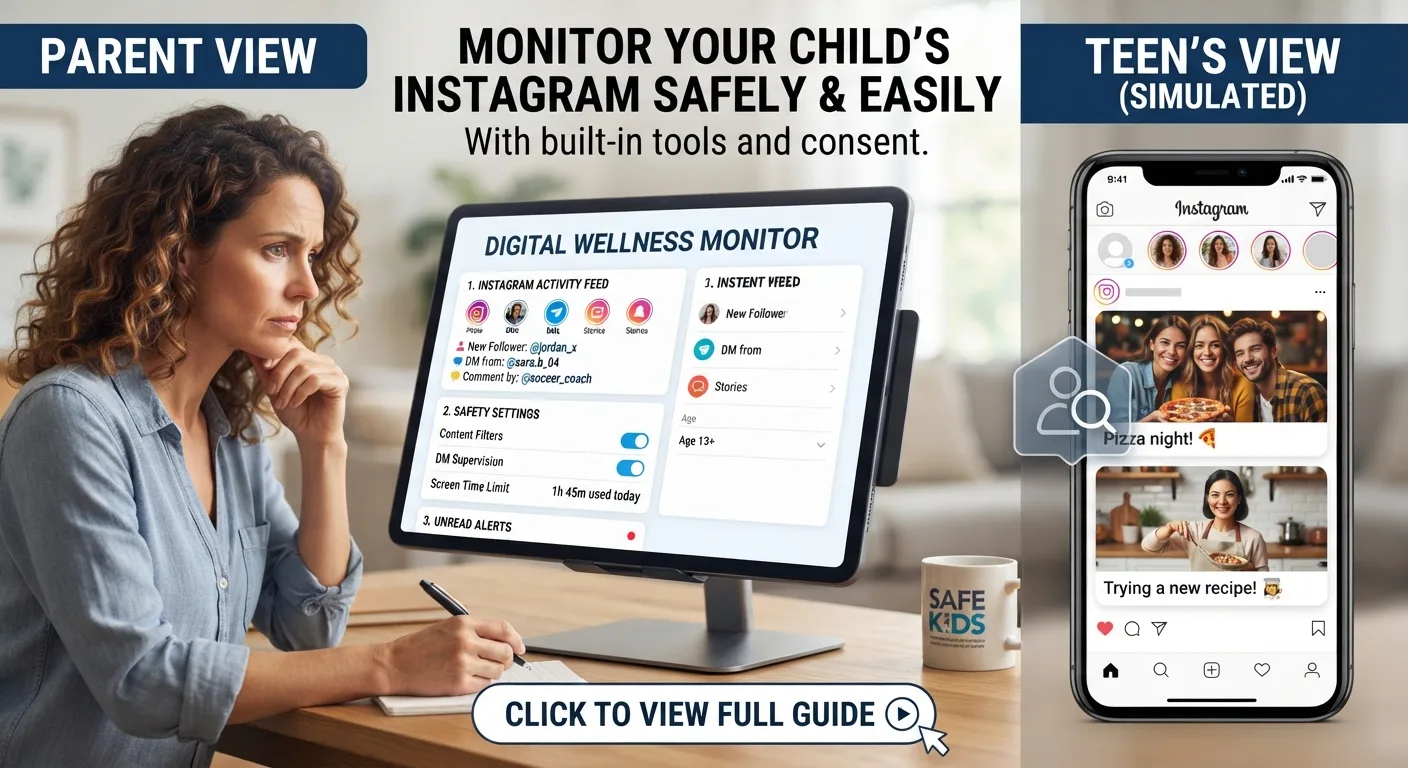
Instagram's Family Center, accessible through the Accounts Center in Settings, is Meta's built-in supervision tool. It requires the teen to accept a supervision invitation, making it a collaborative rather than covert monitoring tool. Once set up, parents can see their teen's follower and following lists, set daily time limits, receive notifications about who their teen has reported or blocked, and view combined screen time reports for Instagram and Facebook if both are supervised.
Family Center does not show parents the actual content of their teen's DMs or the specific content they post and view, maintaining a level of privacy for the teen while still giving parents meaningful oversight of account activity, time spent, and safety-relevant events like blocks and reports.
Screen Time Limits and Reports
Set daily time limits for Instagram use and receive reports showing actual time spent, broken down by day. This gives parents visibility into usage patterns without needing to see specific content.
Follower and Following Visibility
Parents can see who their teen follows and who follows them back, useful for identifying unfamiliar or concerning accounts in their teen's network without accessing private message content.
Block and Report Notifications
Parents receive a notification when their teen blocks or reports another account, which can surface concerning interactions like harassment or unwanted contact that the teen has already taken action against.
Default Teen Account Protections
Instagram automatically applies default protections to accounts registered as belonging to users under 18, including private accounts by default, restricted DM settings from non-followers, and limited sensitive content exposure.
Setting Up Family Center: Step by Step
How to Enable Instagram Supervision
- 1On the parent's account, go to Settings and Privacy, then Family Center, then Supervision.
- 2Select "Invite your teen" or provide a supervision code for the teen to enter on their own device.
- 3The teen must accept the invitation from their own account. This cannot be enabled unilaterally by the parent without the teen's action.
- 4Once accepted, both accounts gain access to the supervision dashboard, though the parent has the controls while the teen has visibility into what the parent can see.
- 5Configure time limits, notification preferences, and review the account's current privacy settings together as a starting conversation point.
Independent Verification: Checking Public Account Settings
Beyond Family Center, parents sometimes want to independently verify that a child's account settings match what was agreed upon, particularly around whether the account remains private as intended. This is where checking a public profile view becomes useful.
If a parent wants to verify whether their child's account is actually set to private, or check what a stranger would see if they searched for the child's profile, viewing the account from outside the supervision relationship, either logged out or through an anonymous viewer tool, shows exactly what the general public sees. This is a useful cross-check independent of what the teen might report directly, and does not require monitoring specific content, just confirming the account's basic visibility settings are what was agreed.
Age-Appropriate Approaches to Monitoring
Digital parenting guidance generally recommends different approaches based on the child's age and developmental stage. For younger children first getting access to social media, more direct and transparent oversight, including shared account access and open review of content together, is widely recommended. For older teens approaching adulthood, a gradual shift toward trust-based oversight with clear safety-focused boundaries, such as Family Center's collaborative model, tends to produce better long-term outcomes than covert surveillance.
Child safety and digital wellbeing organizations, including Common Sense Media and the American Academy of Pediatrics, generally recommend open conversation about social media use as a complement to technical monitoring tools rather than a replacement for them. Technical tools work best as part of an ongoing relationship of communication about online safety, not as a standalone solution.
Red Flags That Warrant Closer Attention
Regardless of monitoring approach, certain patterns warrant a direct conversation and potentially closer oversight. A sudden significant change in mood connected to phone or Instagram use, secretive behavior specifically around the app that is a departure from the child's normal pattern, unfamiliar new contacts or followers that appear repeatedly, and any disclosure or evidence of contact from an adult stranger are all situations where increased parental involvement is appropriate regardless of the child's age or the family's general approach to digital privacy.
Key Takeaways
- Instagram's Family Center is the official, collaborative supervision tool requiring the teen's acceptance, offering screen time limits, follower visibility, and block or report notifications without exposing private message content.
- Teen accounts under 18 receive default protections including private account status, restricted DMs from non-followers, and limited sensitive content exposure automatically.
- Independent verification of account privacy settings through a logged-out or anonymous view is a reasonable safety check distinct from covert content monitoring.
- Digital parenting research generally recommends age-appropriate approaches: more direct oversight for younger children and gradually more trust-based, transparent oversight for older teens.
- Technical monitoring tools work best alongside ongoing, open communication about online safety rather than as a standalone solution.
- Certain red flags, including mood changes connected to app use, secretive behavior, unfamiliar repeated contacts, or any evidence of adult stranger contact, warrant increased parental involvement regardless of general monitoring philosophy.
Frequently Asked Questions
How can I see what my child is doing on Instagram?
Instagram's Family Center provides official visibility into screen time, follower and following lists, and block or report activity once your teen accepts a supervision invitation. This requires collaboration rather than covert access, and does not show private message content or specific posts viewed.
Can I see my child's Instagram DMs?
Not through Instagram's official Family Center supervision tools, which are specifically designed to exclude private message content to maintain some privacy for the supervised teen. Direct access to DMs would require either shared account access with the child's knowledge or their own device and login, not any parental supervision feature.
Does Instagram automatically make accounts private for users under 18?
Yes, for accounts registered with a birthdate indicating the user is under 18, Instagram applies default protections including private account status, though the account holder can change this setting themselves in most cases. Instagram has also implemented age verification technology to identify accounts that may have misrepresented their age at signup.
Is it legal for parents to monitor a minor child's Instagram account?
Yes. Parents generally have legal authority to monitor a minor child's online activity, and this is explicitly supported by Instagram's own terms of service and Family Center feature, which is designed specifically for this purpose. The legal and ethical considerations shift as children approach the age of majority, where privacy expectations generally increase.
What should I do if I find concerning content or contact on my child's Instagram?
Report the specific content or account directly through Instagram's in-app reporting tools. For anything involving suspected grooming, exploitation, or predatory contact from an adult, additionally report to the National Center for Missing and Exploited Children's CyberTipline and consider involving local law enforcement depending on the severity and nature of the situation.