Most Instagram stories are watched passively and forgotten within seconds. The stories that generate genuine DM replies share specific structural characteristics that most creators do not think about deliberately when writing them. AI tools can help engineer these characteristics consistently if you give them the right instructions, rather than the generic "ask a question" advice that produces low-effort, low-response prompts.
Here is exactly what makes a story reply-worthy, and the specific AI prompts that generate this type of content reliably.
Why Most Story Questions Get Almost No Replies
Generic questions like "How's everyone doing today" or "What's your favorite color" fail because they require the viewer to generate an answer from scratch with no specific context, and the question carries no genuine stakes or interest for the viewer to invest effort in responding. The cognitive and social cost of replying outweighs any benefit the viewer perceives from answering.
Reply-worthy story content reduces the cost of responding while increasing the perceived value or relevance of doing so. This is a deliberate design principle, not an accident of a naturally charismatic writing style, which is exactly why AI tools can replicate it consistently once instructed correctly.
The Four Psychological Triggers That Drive Replies
Trigger 1: The Specific, Low-Friction Binary Choice
A question with two specific, easy-to-choose options generates far more replies than an open-ended question. "Team early morning workout or team evening workout" is answerable in two seconds with zero cognitive effort, compared to "what's your fitness routine" which requires the viewer to construct a full answer.
Trigger 2: Niche-Specific Curiosity
A statement that creates genuine curiosity within your specific niche, phrased so that only someone who cares about the niche would feel compelled to ask what you mean, filters for your most engaged audience while generating a natural reply. "The Instagram feature nobody in this niche is using yet" invites a "what is it?" reply from anyone genuinely interested in your content category.
Trigger 3: Reciprocal Vulnerability
Sharing a genuine, specific struggle or uncertainty related to your niche invites viewers to share their own similar experience in return. This works because vulnerability creates social reciprocity, a well-documented psychological pattern where one person's openness invites openness in return, rather than because the content itself is inherently more interesting.
Trigger 4: The Opinion With Stakes
A specific, mildly controversial opinion within your niche, stated confidently, invites both agreement and disagreement replies. This differs from a neutral question because it gives the viewer something concrete to react to rather than requiring them to generate an original thought unprompted.
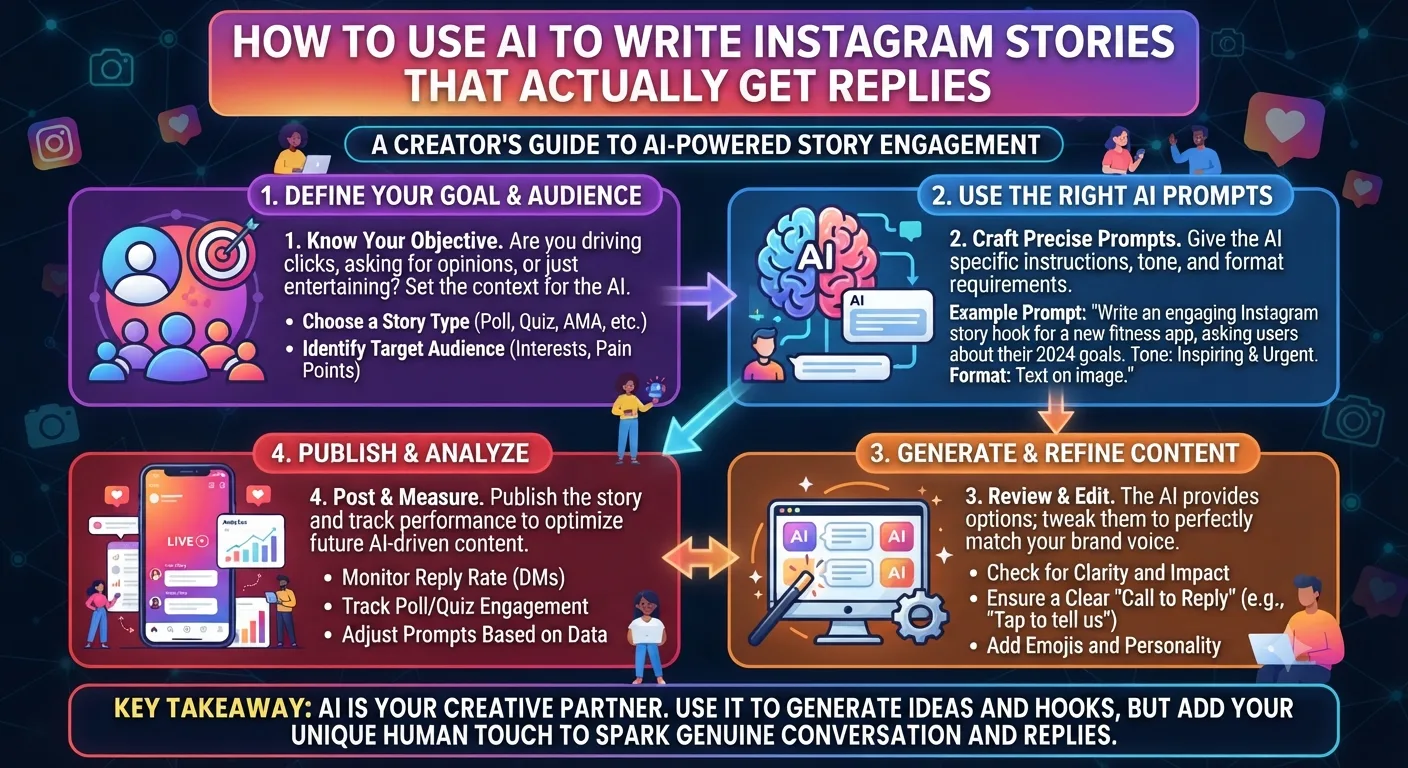
AI Prompts for Each Trigger Type
| Trigger Type | ChatGPT/Claude Prompt Template |
|---|---|
| Binary Choice | "Write 5 specific binary-choice questions for Instagram stories in the [niche] space. Each option should be a real, specific choice someone in this niche actually faces, not a generic preference. Format: 'Team X or Team Y'." |
| Niche Curiosity | "Write 5 curiosity-gap statements for Instagram stories about [niche topic]. Each should hint at valuable information without revealing it, phrased so only someone genuinely interested in [niche] would feel compelled to ask what it means." |
| Reciprocal Vulnerability | "Write 3 short, genuine story captions sharing a specific struggle or uncertainty related to [niche topic] that would invite followers to share their own similar experience. Keep it authentic and specific, not generic or dramatic." |
| Opinion With Stakes | "Write 5 mildly controversial but defensible opinions about [niche topic] as short Instagram story statements. Each should be specific enough to invite genuine agreement or disagreement replies, not so extreme that it feels inflammatory." |
Building a Weekly Story Reply Strategy
Structuring Reply-Focused Stories Across a Week
- 1Generate a batch of story prompts across all four trigger types using the templates above, producing roughly 15 to 20 options for the week.
- 2Select 3 to 5 of the strongest options to actually post, spacing them throughout the week rather than clustering them together, which can feel repetitive to your audience.
- 3Reply to every response you receive, since this reinforces the relationship signal and encourages continued engagement from that specific follower on future stories.
- 4Track which trigger type generates the most replies for your specific audience over several weeks, and weight future content generation toward whichever type performs best for your niche.
Key Takeaways
- Generic, open-ended story questions get few replies because they require high cognitive effort and offer low perceived value to the viewer for responding.
- The four psychological triggers that reliably generate replies are specific binary choices, niche-specific curiosity gaps, reciprocal vulnerability, and confidently stated opinions with genuine stakes.
- AI tools can generate content matching each trigger type reliably when given specific instructions about the psychological mechanism, rather than generic "write an engaging question" prompts.
- Replying to every DM response you receive from a story reinforces the relationship signal that improves your future story tray position with that specific follower.
- Tracking which trigger type performs best for your specific audience over time allows you to weight future content generation toward your highest-converting approach.
- Reply-focused stories create a compounding engagement advantage, since strengthened relationship signals improve the algorithmic distribution of all future content to your most engaged followers.
Frequently Asked Questions
What type of Instagram story question gets the most replies?
Specific, low-friction binary choice questions tend to generate the highest reply volume because they require minimal effort to answer while still feeling personal and relevant. Niche-specific curiosity gaps generate fewer total replies but often higher-quality, more engaged conversations since they filter for genuinely interested followers.
Should I use the poll sticker or ask an open question for more engagement?
Poll stickers generate higher total interaction volume since tapping requires almost no effort, but open questions that use the four psychological triggers described generate genuine DM conversations that build stronger individual relationships. Using both in combination, polls for broad engagement signal and targeted questions for deeper relationship building, is the most effective overall approach.
How many reply-focused stories should I post per week?
Three to five well-crafted reply-focused stories per week, spaced throughout the week rather than clustered together, tends to perform better than posting one every single day. Overuse of the same engagement tactic can reduce its effectiveness over time as followers become accustomed to the pattern.
Does it matter if I use AI to write these story prompts instead of writing them myself?
No, as long as the final content genuinely reflects your voice and niche knowledge. AI is effective for generating the structural framework and variations quickly, but reviewing and personalizing the output to match your specific brand voice and genuine perspective improves authenticity and typically improves reply rates further, since generic AI output without personalization can feel impersonal.
What should I do with the DM replies I receive from these stories?
Reply to every one, even briefly. This reinforces the relationship signal that benefits your future story tray position with that follower and often opens genuine conversations that can lead to deeper community engagement or business opportunities. Treating story replies as disposable engagement rather than genuine conversation starters wastes much of the strategic value this approach creates.